
The strongest signs he wants a serious relationship appear through consistent choices over time—not through one exciting moment or attractive gesture.
When you care about someone, small moments can feel like evidence. He texts every morning. He introduces you to friends. He says he has never felt this way before. You spend most weekends together, and the relationship feels increasingly woven into daily life.
Those experiences may be meaningful. None of them, by itself, proves that he intends to build the same serious relationship you want.
Seriousness is better understood as a pattern: a growing sense of “us with a future,” supported by choices that protect the relationship, make room for both people, and become clearer over time. The goal is not to score him against a checklist. It is to see whether words, behavior, and direction tell the same story.
Start by defining what “serious” means to you
“Serious relationship” can mean exclusivity, emotional partnership, marriage, shared finances, cohabitation, family involvement, or simply an intentional long-term bond. Two people can both use the word serious while imagining different futures.
Before interpreting his behavior, name the commitment you are assessing. Do you want exclusivity? A path toward marriage? A partner who can plan a shared life while preserving two individual lives? Clear definitions make attractive signals easier to evaluate.
Before making deeper long-term decisions together, consider these serious relationship questions to ask before you commit.
Stronger signs that he is intentionally building a serious relationship
He speaks about direction with clarity
A serious partner does not need to know every detail of the future. He should be increasingly able to say what kind of relationship he wants, whether he is choosing this relationship, and which next steps he is prepared to consider. “I care about you” describes feeling. “I want us to be exclusive and see whether we can build a life together” describes direction.
His plans become specific enough to rely on
Future talk is most informative when it changes present decisions. He makes plans beyond the next convenient evening. He considers travel, holidays, work demands, family responsibilities, or other realities that require coordination. He does not have to merge every part of life quickly, but his choices increasingly make room for the relationship.
His behavior is dependable across ordinary weeks
Commitment is not constant availability. People have jobs, health needs, families, friendships, and periods of reduced capacity. The stronger signal is continuity: he communicates changes, keeps enough commitments to be trustworthy, and repairs when he lets you down. The relationship does not depend entirely on peak romantic moments.
You are gradually included in his real life
Integration can include friends, family, routines, decisions, and practical realities. The pace will differ by culture, age, privacy, caregiving obligations, and the stage of the relationship. The important question is whether inclusion grows in a way that matches the commitment being discussed—or whether you remain in a carefully separate compartment with no understandable reason.
He considers joint outcomes, not only personal convenience
Relationship commitment includes the ability to think as two people whose choices affect each other. This does not mean surrendering independence. It means considering your time, needs, goals, and boundaries when decisions touch the relationship.
Day-to-day consideration can also help you understand what it means to be a priority in a healthy relationship.
Look for ordinary evidence: making a fair adjustment when schedules conflict, protecting time together, consulting you before a decision that changes shared plans, and being willing to negotiate rather than assuming his preference is the default.
He can tolerate conversations that make the relationship more real
Exclusivity, money, sex, health, children, aging parents, living arrangements, and marriage can carry emotional weight. Serious intent does not guarantee easy agreement. It makes honest engagement more likely. He can hear what matters to you, reveal his own position, and acknowledge incompatibility if it exists.
Repair and responsibility are visible
A serious relationship is not one without disappointment. Watch what happens after a broken plan, careless comment, or conflict. Can he recognize impact, accept his part, return to the discussion, and change relevant behavior? Repeated repair is stronger evidence than a grand apology followed by the same pattern.
Investment is chosen, mutual, and healthy
Time, emotional openness, effort, and shared experiences can deepen commitment. Yet investment is not automatically proof that a relationship is good or that two people want the same future. The useful signal is chosen dedication: both people are contributing because they want to build the bond, not simply because leaving has become complicated.
Attractive signals that are not proof on their own
Frequent texting and intense attention
Daily contact can show interest and create closeness. It can also reflect novelty, habit, loneliness, or a communication style. Ask whether the attention remains respectful and reliable when life is less exciting and whether it is connected to real-world choices.
Strong chemistry or early emotional intensity
Chemistry matters to many couples. It does not answer questions about values, availability, exclusivity, conflict, or the future. Intensity can coexist with uncertainty. Let time reveal whether warmth and dependability belong together.
Sex or physical affection
Physical intimacy can be loving and important without carrying the same meaning for both people. Sex is not a contract for exclusivity or marriage. The meaning of the relationship still needs mutual, spoken agreement.
Meeting friends or family
Introductions can be a meaningful form of inclusion, especially when they are supported by ongoing integration. In some families introductions are casual; in others they carry considerable weight. The event becomes useful evidence only in context.
Spending money, giving gifts, or taking trips
Generosity can express care. It cannot substitute for honesty, respect, compatibility, or future planning. Expensive gestures may feel convincing while leaving the relationship’s direction unchanged.
Using a label or posting the relationship online
A label can create clarity when both people agree on what it means. Public visibility can support that clarity. Neither prevents private inconsistency. Notice whether the lived relationship matches the public description.
Jealousy, possessiveness, or fear of losing you
Jealousy is not proof of love or commitment. Attempts to monitor, isolate, intimidate, or control you are safety concerns, not flattering evidence that the relationship matters.
Use the words-actions-time test
When you feel uncertain, compare three sources of information.
- Words: What relationship and future does he say he wants?
- Actions: What choices demonstrate that intention in ordinary life?
- Time: Is the pattern becoming clearer and more mutual, or remaining indefinitely ambiguous?
No category needs to be perfect. The question is whether the three are sufficiently aligned. Clear words with no action are not enough. Action that resembles commitment while he avoids defining the relationship may still leave a material disagreement unresolved. Time should add information rather than simply extend confusion.
If positive signs continue alongside unresolved hesitation, examining why he won’t commit may help you understand what the delay means.
When signs are not enough, ask directly
You are not needy for wanting to know the direction of a relationship that affects your life. A direct question is not pressure when it respects both people’s freedom to answer honestly.
“I care about what we are building, and I am looking for a serious relationship that means [your definition]. How do you see us, and what are you realistically interested in building?”
For a more complete conversation plan, learn how to talk about commitment without pressure or games.
The purpose is not to secure the right words. It is to make room for reality. Compare the answer with later decisions. If his desired relationship differs from yours, clarity may hurt, but it allows both people to choose rather than remain in an accidental arrangement.
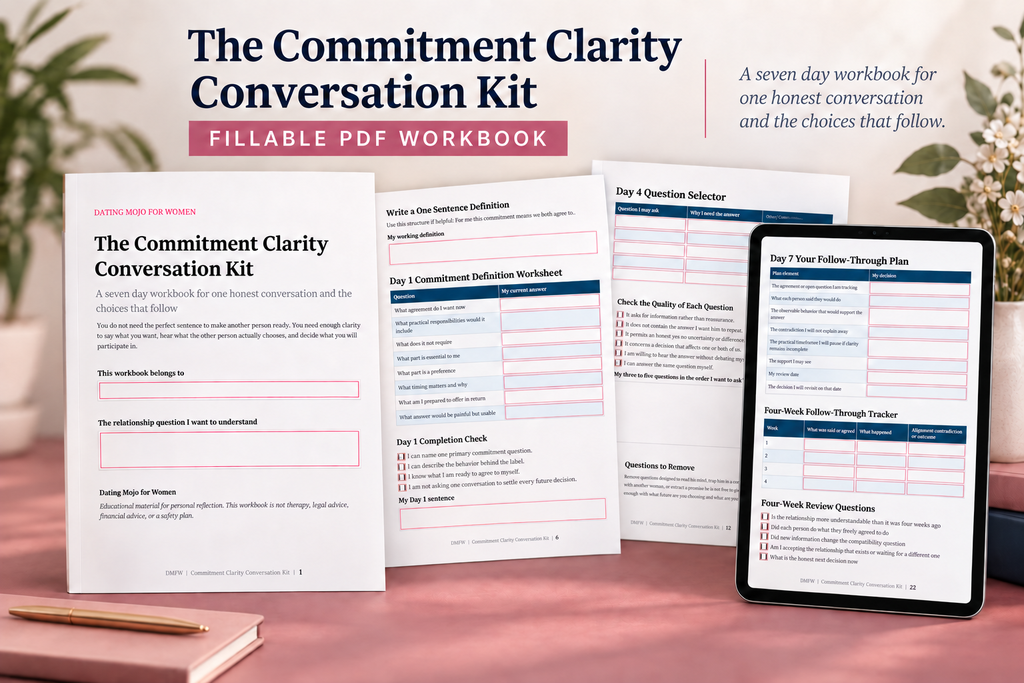
The Commitment Clarity Conversation Kit
Clarify what a serious relationship means to you and prepare a direct conversation about what each of you wants to build.
$7 USD · Fillable PDF workbook
Take the whole pattern seriously—including your own experience
A relationship can contain many positive signs and still be wrong for you. Serious intention does not erase incompatibility, disrespect, or an unequal burden. You are not evaluating whether he qualifies as a good person. You are deciding whether the relationship being built is mutual, healthy, and consistent with your future.
The strongest sign is not one gesture. It is a relationship that becomes more understandable as it grows: clearer direction, dependable care, room for honest differences, and choices that show both people are participating in the same future.